
A new report from PwC says the US economy is splitting into two paths at once. Rich shoppers keep spending like nothing's wrong, while everyone else pulls back hard. This matters right now because it changes how stores, banks, and policymakers plan for the rest of the year.
Quick Take
- PwC's new analysis calls this a "K-shaped economy" — one group of consumers goes up, another goes down, at the same time.
- Higher-income households keep spending on travel, dining out, and big purchases.
- Lower- and middle-income households are cutting back, watching prices closely, and leaning on credit.
- This split shows up in retail sales, travel bookings, and even fast food versus fine dining trends.
- PwC says businesses need to stop treating "the consumer" as one single group.
What "K-Shaped" Actually Means
Picture the letter K. One line goes up. One line goes down. Both start from the same spot.
That's what PwC says is happening to US consumers. Instead of everyone rising or falling together, the country is splitting into two very different groups. Rich households are on the upward line. Everyone else is drifting lower.
This isn't a new idea — economists have used "K-shaped recovery" language since the pandemic. But PwC's report argues the split is still very real today, not just a leftover from 2020.
One notable claim from the report: consumer behavior itself has become the clearest evidence of economic inequality, more revealing than jobs data alone.
Who's Spending And Who's Saving
The top of the K belongs to higher-income Americans. Many of them have strong stock portfolios, paid-off homes, or solid raises. They keep booking flights, buying concert tickets, and eating out.
The bottom of the K belongs to households with lower income or high debt. They're the ones feeling every price hike at the grocery store. Many are using buy-now-pay-later plans or credit cards just to cover normal bills.
| Group |
Spending Pattern |
Common Behavior |
| Higher-income households |
Steady or rising |
Travel, dining out, luxury goods |
| Middle-income households |
Cautious |
Trading down brands, watching sales |
| Lower-income households |
Pulling back |
Cutting extras, relying on credit |
This table shows the split isn't just rich versus poor. It's a full range, with the middle getting squeezed the hardest.
Why Stores And Brands Feel It First
Retailers see this split before economists do. Luxury brands and premium airlines report strong demand. At the same time, discount stores and value menus at fast food chains report more traffic from budget-conscious shoppers.
Companies in the middle — regular department stores, mid-price restaurants — are the ones struggling most. They're stuck without a clear customer base, because that middle group keeps shrinking or changing habits.
PwC's report frames this plainly: businesses that assume one "average" customer risk missing where real growth or real risk is happening.
That's a warning for any company that builds one pricing plan or one marketing message for everybody.
What This Means For The Bigger Economy
A K-shaped economy can hide trouble. Overall spending numbers might look fine because rich households are still buying a lot. But that can mask the fact that a large share of people are struggling.
This creates a tricky picture for the Federal Reserve and other policymakers. If they only look at total spending, they might think things are healthier than they really are. PwC's point is that averages lie when the gap between groups keeps growing.
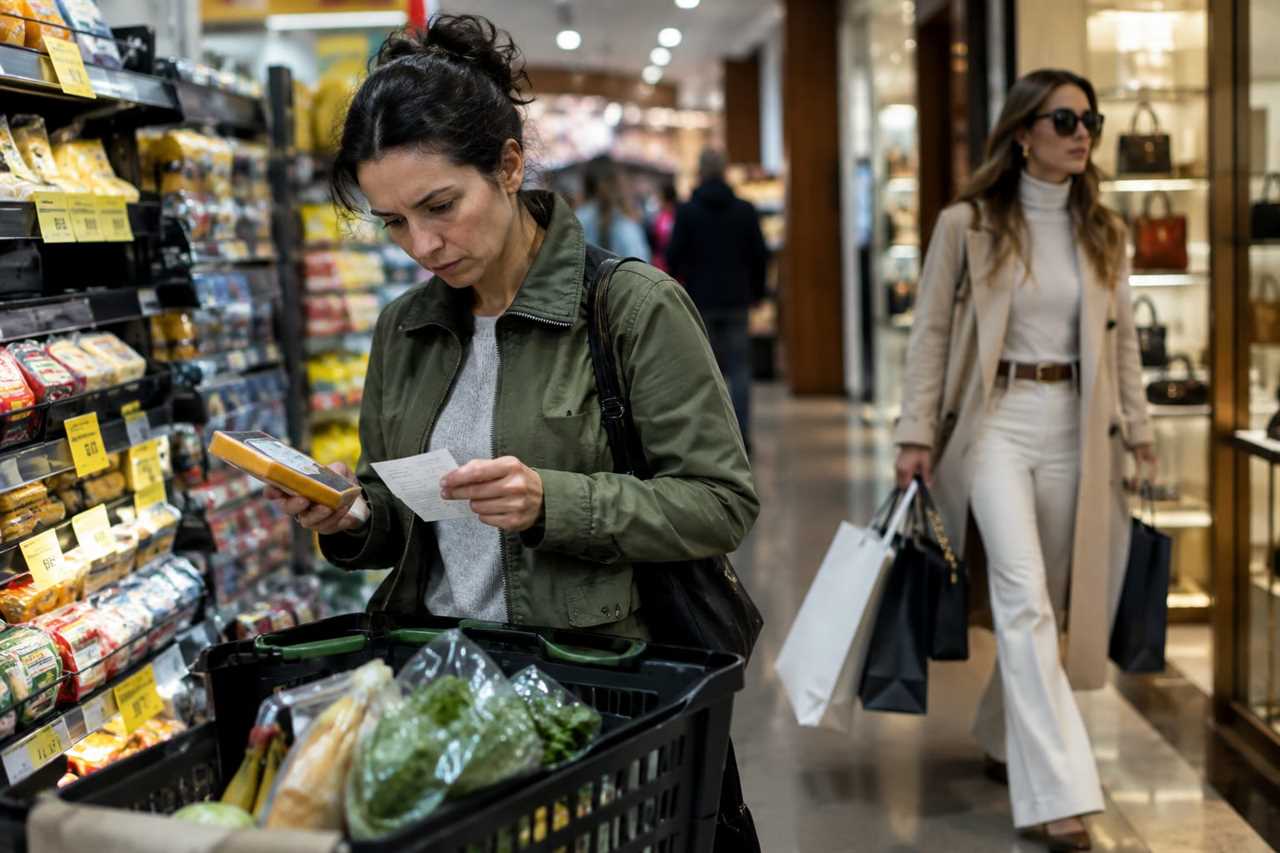
Debt is a big piece of this. Credit card balances and delinquencies (missed payments) have been climbing among lower-income households. That's a warning sign, even while total consumer spending numbers stay positive.
What's Next
Expect more companies to split their strategies the same way the economy has split — one plan for high-spending customers, another for budget-squeezed ones. Expect economists and the Fed to keep watching household debt data closely, not just overall spending totals.
The bigger question is whether this K shape narrows or widens. PwC's report makes clear that right now, it's still widening — and that's the number every business and every policymaker should be watching next.
Before this, we covered: Why an Emergency Fund Belongs at the Top of Your Money List
 Financial ConceptsWealth StrategiesVideosPodcastsNewsPrivacy PolicyTerms And Conditions